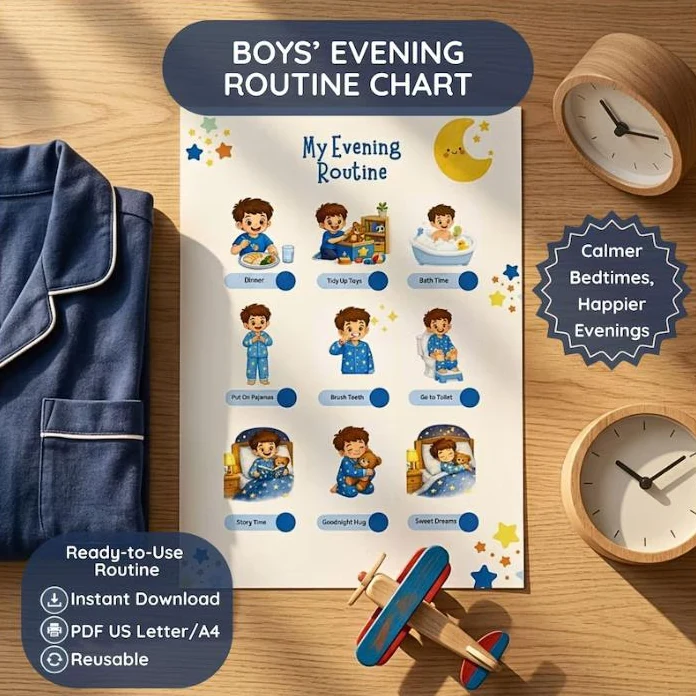
What does a visual routine chart help with?
For preschool and early primary children, mornings and bedtimes are made of many small steps in a row. A visual routine chart shows those steps in order with pictures, so children can answer “what comes next?” for themselves.
Predictable steps can make transitions easier, reduce the need for constant reminders and support a child’s sense of independence. Every child is different; charts tend to work best when parents introduce the routine together at a calm moment.
How to use it
- Download and print the file; laminate it if you like.
- Hang the chart where your child can see it every day (door, fridge, bathroom).
- Follow the steps together at your child’s pace in the first days.
- Let your child add a sticker or tick as each step is done.
- As the routine settles, step back and let your child lead.
Tips for parents
- You can start with fewer steps for younger children; there is no need to use them all on day one.
- Short feedback that notices effort (“You brushed your teeth by yourself”) often works better than praise for the result.
- It is normal to loosen the routine on holidays and changed days.
These printables are general resources for everyday life; they do not replace individual assessment, diagnosis or treatment.
Related: Parent counselling
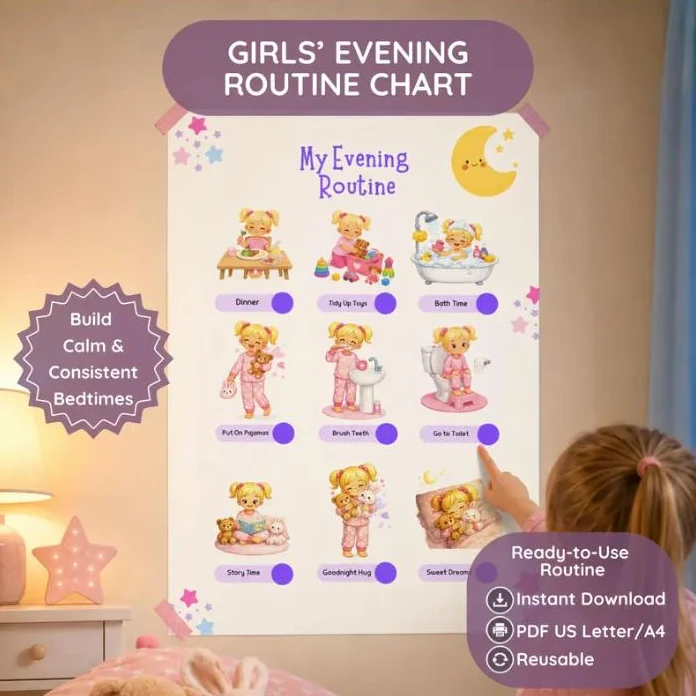 Girls Bedtime Routine Chart
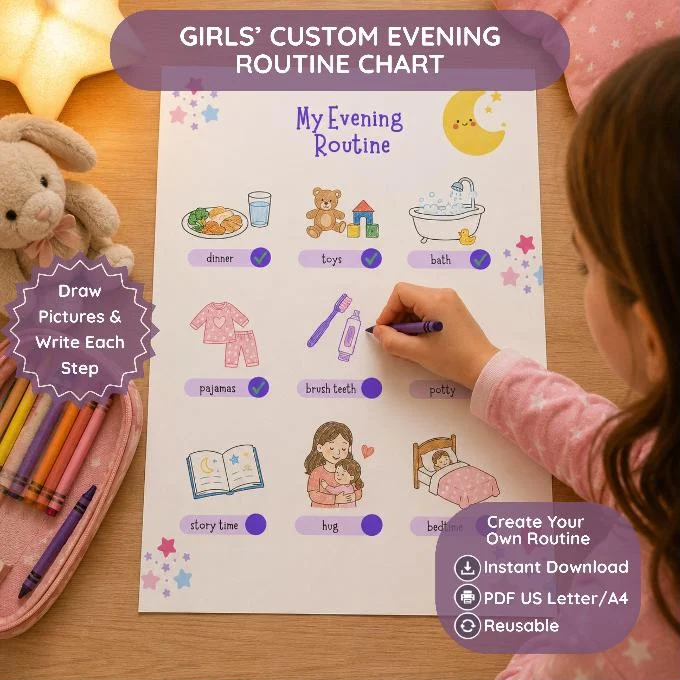 Girls Evening Routine Chart (Create Your Own)
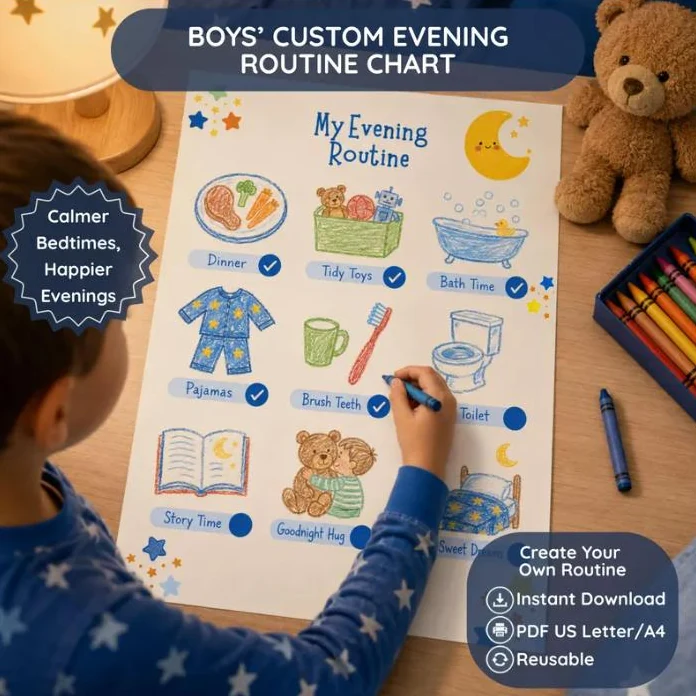 Boys Evening Routine Chart (Create Your Own)
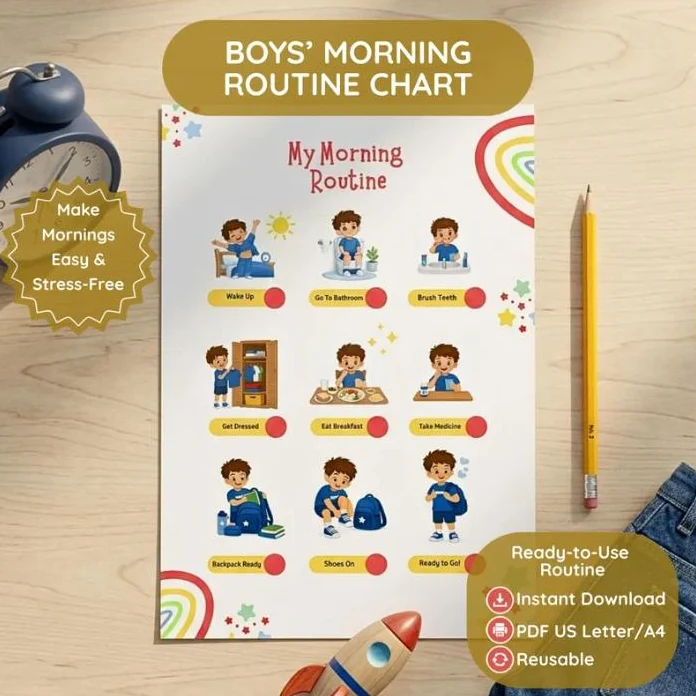 Boys Morning Routine Chart